
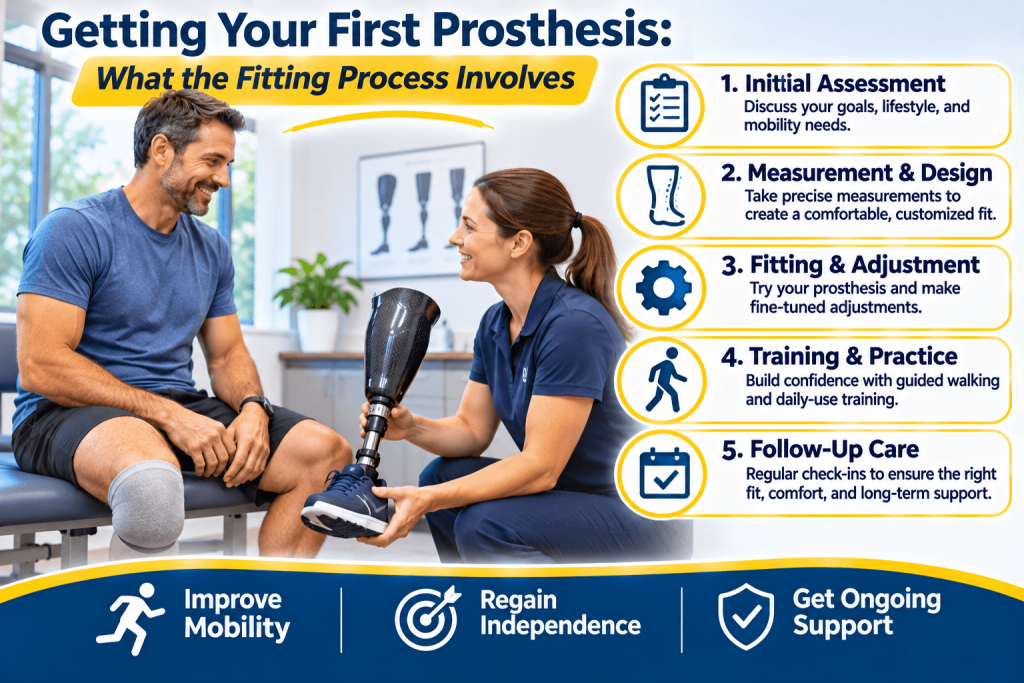
A first prosthesis is usually fitted after the residual limb has healed and swelling has stabilized, following an evaluation by a physician and a certified prosthetist. The process includes measuring or casting, one or more test sockets, fitting adjustments, and physical therapy to learn to use the device safely.
Knowing the steps helps patients and families prepare for a process that often takes several visits.
From Evaluation to First Steps
- Evaluation: the prosthetist reviews health, activity goals, and limb condition.
- Shaping and healing: compression garments may help reduce swelling before casting.
- Casting or scanning: the limb is measured to create a custom socket.
- Test socket: a temporary socket checks fit and comfort.
- Final fitting: components are chosen based on activity level and goals.
- Training: physical therapists help with balance, walking, and daily activities.
Choosing a Prosthetics Clinic
Look for practitioners certified by the American Board for Certification in Orthotics, Prosthetics and Pedorthics or the Board of Certification/Accreditation. Ask about experience with your type of limb loss, how adjustments are scheduled, and how quickly the clinic responds to fit problems.
Fit changes over time as the limb changes shape, especially in the first year. Regular follow-up visits and socket adjustments are normal and important for comfort and skin health.
Building a Support Network
Adjusting to a prosthesis involves physical and emotional changes. Peer support groups, often organized through hospitals or organizations like the Amputee Coalition, connect new users with people who have similar experiences. Family members can attend appointments to learn about care routines and how to help.
Ask your care team about counseling resources and community programs. Support from others who understand the process can make the adjustment smoother.
Many new prosthesis users find that setting small goals, such as walking a certain distance or returning to a hobby, helps them stay motivated through therapy and adjustments. Celebrate progress along the way.
Insurance and Documentation
Medicare and many insurers require documentation from the physician and prosthetist showing medical need and expected functional level. Ask the clinic to explain coverage, prior authorization, and out-of-pocket costs before ordering components.
Patients and families can review orthotics and prosthetics clinics on Great Listingz and ask about certifications and follow-up care. Patients and families can compare clinics there and ask about certifications and follow-up care before choosing a provider.
A Process Built Around You
A first prosthesis involves evaluation, casting, test sockets, final fitting, and therapy, followed by regular adjustments. Choose certified practitioners, ask about follow-up care, and understand insurance documentation early. Great Listingz can help patients and families compare prosthetics clinics.