
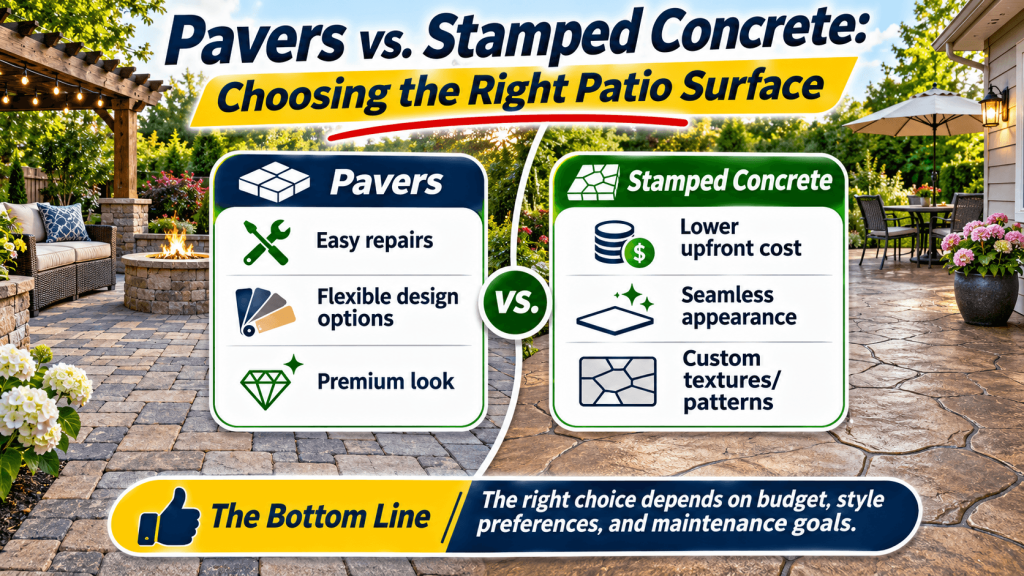
Stamped concrete usually costs less to install and creates a seamless look with patterns that mimic stone or brick. Interlocking pavers usually cost more upfront but are easier to repair, since individual units can be replaced, and they flex better with ground movement in freeze-thaw climates.
The best choice depends on budget, climate, maintenance preferences, and how long you plan to stay.
Where Pavers and Stamped Concrete Differ
- Cost: stamped concrete is often less expensive per square foot; pavers cost more but vary widely.
- Repairs: damaged pavers can be lifted and replaced; stamped concrete repairs are often visible.
- Cracking: concrete can crack with ground movement; pavers move slightly without cracking.
- Maintenance: stamped concrete needs periodic resealing; pavers may need joint sand refills and weed control.
- Design: both offer many colors and patterns; pavers allow borders and mixed materials more easily.
Base and Drainage Matter Most
Both surfaces depend on proper excavation, compacted base material, and drainage that slopes water away from the house. Pavers rely on a carefully compacted gravel base and edge restraints. Concrete relies on base preparation, thickness, and control joints to manage cracking.
Ask contractors how deep they will excavate, what base material they use, and how they will handle drainage near the foundation. Some areas require permits for patios or limit impervious surfaces, so check local rules.
Design Tips for a Lasting Patio
Plan the patio size around how you will use it, such as dining, lounging, or grilling, and leave space for furniture and walkways. Consider sun exposure, since dark surfaces can get hot in summer. Add a slight slope away from the house for drainage.
Lighting, seating walls, and fire features can be added later, but plan electrical and gas lines before installation to avoid cutting into new surfaces.
Choose colors and textures that complement the home’s exterior and nearby landscaping. Samples help you visualize the final look.
Hiring a Hardscaping Contractor
Request written estimates describing excavation depth, base materials, surface materials, sealing, and warranties. Ask for photos and addresses of projects several years old. Interlocking Concrete Pavement Institute certification can indicate paver installation training.
Great Listingz’s hardscaping and patio contractors make it easier to collect several estimates with real local pricing. Comparing estimates there helps homeowners weigh pavers and stamped concrete with real local pricing.
Choose for Climate, Budget, and Repairs
Stamped concrete offers a seamless look at lower upfront cost, while pavers offer easier repairs and better flexibility in freeze-thaw climates. Focus on base preparation and drainage, check local permit rules, and compare detailed estimates. Great Listingz can help you find hardscaping contractors.